Be yourself; Everyone else is already taken.
— Oscar Wilde.
This is the first post on my new blog. I’m just getting this new blog going, so stay tuned for more. Subscribe below to get notified when I post new updates.
Be yourself; Everyone else is already taken.
— Oscar Wilde.
This is the first post on my new blog. I’m just getting this new blog going, so stay tuned for more. Subscribe below to get notified when I post new updates.
Artificial intelligence has made its way into a number of areas. Here are six examples.
Artificial intelligence (AI) refers to the simulation of human intelligence in machines that are programmed to think like humans and mimic their actions. The term may also be applied to any machine that exhibits traits associated with a human mind such as learning and problem-solving.
The ideal characteristic of artificial intelligence is its ability to rationalize and take actions that have the best chance of achieving a specific goal.
When most people hear the term artificial intelligence, the first thing they usually think of is robots. That’s because big-budget films and novels weave stories about human-like machines that wreak havoc on Earth. But nothing could be further from the truth.
Artificial intelligence is based on the principle that human intelligence can be defined in a way that a machine can easily mimic it and execute tasks, from the most simple to those that are even more complex. The goals of artificial intelligence include learning, reasoning, and perception.

As technology advances, previous benchmarks that defined artificial intelligence become outdated. For example, machines that calculate basic functions or recognize text through optimal character recognition are no longer considered to embody artificial intelligence, since this function is now taken for granted as an inherent computer function.
AI is continuously evolving to benefit many different industries. Machines are wired using a cross-disciplinary approach based in mathematics, computer science, linguistics, psychology, and more.
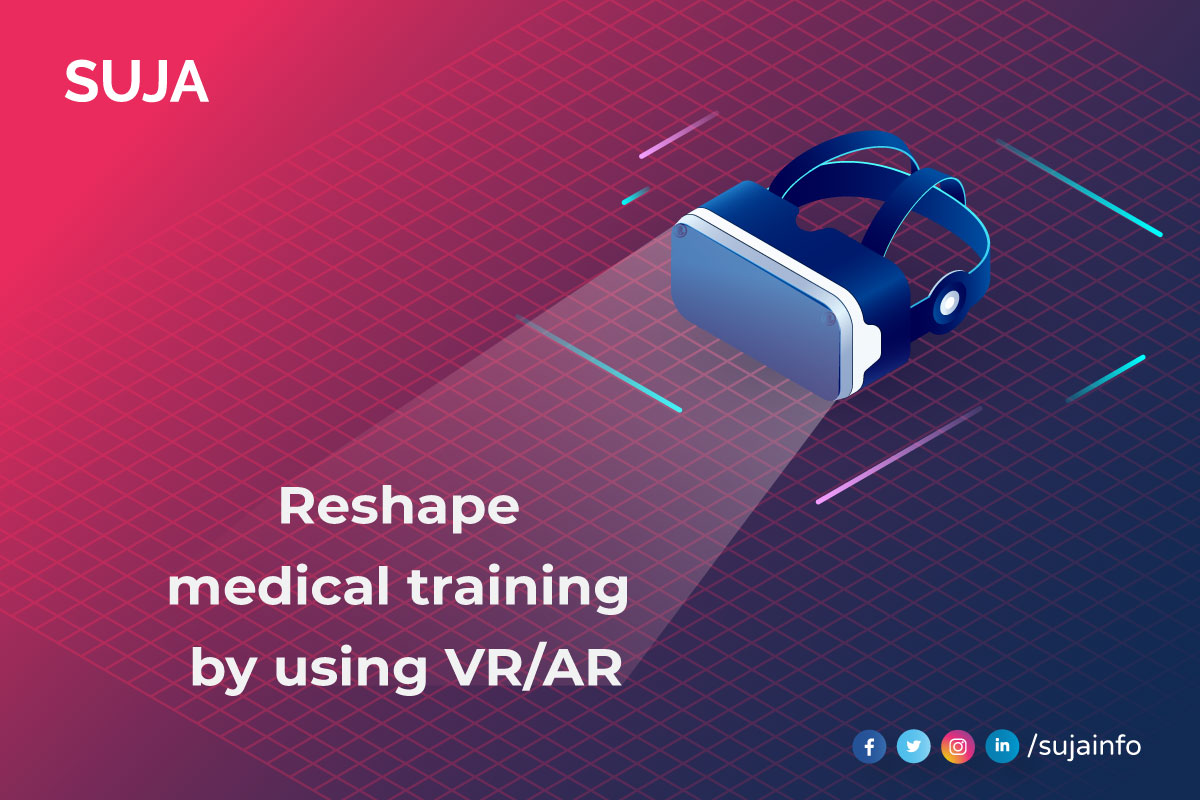
You’ll probably never go to Mars, swim with dolphins, run an Olympic 100 meters, or sing onstage with the Rolling Stones. But if virtual reality ever lives up to its promise, you might be able to do all these things—and many more—without even leaving your home. Unlike real reality (the actual world in which we live), virtual reality means simulating bits of our world (or completely imaginary worlds) using high-performance computers and sensory equipment, like headsets and gloves. Apart from games and entertainment, it’s long been used for training airline pilots and surgeons and for helping scientists to figure out complex problems such as the structure of protein molecules. How does it work? Let’s take a closer look!You’ll probably never go to Mars, swim with dolphins, run an Olympic 100 meters, or sing onstage with the Rolling Stones. But if virtual reality ever lives up to its promise, you might be able to do all these things—and many more—without even leaving your home. Unlike real reality (the actual world in which we live), virtual reality means simulating bits of our world (or completely imaginary worlds) using high-performance computers and sensory equipment, like headsets and gloves. Apart from games and entertainment, it’s long been used for training airline pilots and surgeons and for helping scientists to figure out complex problems such as the structure of protein molecules. How does it work? Let’s take a closer look!
Virtual reality (VR) means experiencing things through our computers that don’t really exist. From that simple definition, the idea doesn’t sound especially new. When you look at an amazing Canaletto painting, for example, you’re experiencing the sites and sounds of Italy as it was about 250 years ago—so that’s a kind of virtual reality. In the same way, if you listen to ambient instrumental or classical music with your eyes closed, and start dreaming about things, isn’t that an example of virtual reality—an experience of a world that doesn’t really exist? What about losing yourself in a book or a movie? Surely that’s a kind of virtual reality?
If we’re going to understand why books, movies, paintings, and pieces of music aren’t the same thing as virtual reality, we need to define VR fairly clearly. For the purposes of this simple, introductory article, I’m going to define it as:
A believable, interactive 3D computer-created world that you can explore so you feel you really are there, both mentally and physically.
Putting it another way, virtual reality is essentially:Believable: You really need to feel like you’re in your virtual world (on Mars, or wherever) and to keep believing that, or the illusion of virtual reality will disappear.
3.Interactive: As you move around, the VR world needs to move with you. You can watch a 3D movie and be transported up to the Moon or down to the seabed—but it’s not interactive in any sense.Computer-generated: Why is that important? Because only powerful machines, with realistic 3D computer graphics, are fast enough to make believable, interactive, alternative worlds that change in real-time as we move around them.
4.Explorable: A VR world needs to be big and detailed enough for you to explore. However realistic a painting is, it shows only one scene, from one perspective. A book can describe a vast and complex “virtual world,” but you can only really explore it in a linear way, exactly as the author describes it.
5.Immersive: To be both believable and interactive, VR needs to engage both your body and your mind. Paintings by war artists can give us glimpses of conflict, but they can never fully convey the sight, sound, smell, taste, and feel of battle. You can play a flight simulator game on your home PC and be lost in a very realistic, interactive experience for hours (the landscape will constantly change as your plane flies through it), but it’s not like using a real flight simulator (where you sit in a hydraulically operated mockup of a real cockpit and feel actual forces as it tips and tilts), and even less like flying a plane.

After the Postpone of Most awaited movie Saaho, Tollywood has new releases on the eve of Independence day With 2 different subjects to hit the screen. One is Sharwanand‘s Ranarangam and Adivi sesh‘s yevaru.
Ranarangam is a crime action thriller film written and directed by Sudheer Varma. Produced by Suryadevara Naga Vamsi under his banner Sithara Entertainments, it features Sharwanand, Kajal Aggarwal and Kalyani Priyadarshan in the lead roles .
This film has already Released its teaser month back and firstly it was all set to release on August 2nd but due to the postpone of Saaho it has postponed its release and now 3 songs were released with 3 different genres “Kannu kotti” and “Seetha kalyanam” were instant hits. This Film has raised expectations to be a great hit.
Another film to get released on the eve of Independence day is Adivi sesh‘s Yevaru. Where Regina palys and important character in the film. Its an suspense thriller directed by Venkat ramji
When a high-ranking police official is killed by his alleged rape victim, Sub-inspector Vikram Vasudev is entrusted with investigating what seems like an open-and-shut case. As he delves deeper, Vikram finds the case spiralling into a dark tale filled with unexpected surprise .
So its all set for this Independence day for the 2 Telugu films to hit the screen and to make an impact

Dear Comrade is an intense love story between Bobby (Vijay Deverakonda), a student union leader and Lily (Rashmika Mandanna) a state-level cricketer. Bobby has anger management issues, which he needs to overcome and fight for his love.

Dear comrade movie songs have become a huge hit. Especially the Canteen song and two beautiful Melodies which was composed by Justin prabhakaran. The Tamil songs, Telugu song and Kannada Songs were instant hits. with this josh the the makers of Dear Comrade movie released the trailer.
The Dear Comrade trailer was tranding all over the south in all the languages and its has become more hit than the Teaser which was released earlier.

Now, its all set for the Grand Release. Dear Comrade release date is fixed on 26th July i.e., on Friday and Pre Release event to be held on 24th Jult at Vizag
So wait for 26th july for the Dear Comrade Review on MovieCric
This is an example post, originally published as part of Blogging University. Enroll in one of our ten programs, and start your blog right.
You’re going to publish a post today. Don’t worry about how your blog looks. Don’t worry if you haven’t given it a name yet, or you’re feeling overwhelmed. Just click the “New Post” button, and tell us why you’re here.
Why do this?
The post can be short or long, a personal intro to your life or a bloggy mission statement, a manifesto for the future or a simple outline of your the types of things you hope to publish.
To help you get started, here are a few questions:
You’re not locked into any of this; one of the wonderful things about blogs is how they constantly evolve as we learn, grow, and interact with one another — but it’s good to know where and why you started, and articulating your goals may just give you a few other post ideas.
Can’t think how to get started? Just write the first thing that pops into your head. Anne Lamott, author of a book on writing we love, says that you need to give yourself permission to write a “crappy first draft”. Anne makes a great point — just start writing, and worry about editing it later.
When you’re ready to publish, give your post three to five tags that describe your blog’s focus — writing, photography, fiction, parenting, food, cars, movies, sports, whatever. These tags will help others who care about your topics find you in the Reader. Make sure one of the tags is “zerotohero,” so other new bloggers can find you, too.
Have a WordPress.com account? Log in now.

